
REVIEW · LANDMARK ISLAND FERRY TICKETS
Robben Island Nelson Mandela’s Prison Museum + Township Tour incl Ferry Tickets
Robben Island gives this Cape Town day its emotional center: you stand in the prison where Nelson Mandela spent 18 years, then return to the city to see how apartheid shaped Langa Township. I like the way the tour pairs a major national memorial with a living community, rather than treating South African history as something locked behind museum doors. I also like that the ferry ticket, hotel transport, lunch, and island transfer are bundled together.
The drawback is the pace. You are fitting an island excursion, a long transfer, lunch, and a township visit into roughly eight hours. Ferry schedules and traffic can affect the day, and the subject matter is often sobering. You should book this for serious historical learning, not a light sightseeing outing.
Key points at a glance
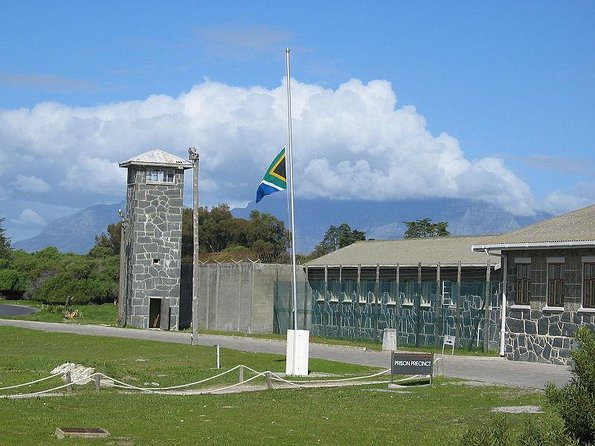
- Nelson Mandela’s prison cell: See the small cell where Mandela spent 18 of his 27 prison years.
- Two very different settings: Robben Island presents apartheid through a former prison, while Langa shows its effects on a living Cape Town community.
- Gugu S’thebe Cultural Centre: Visit one of Langa’s cultural focal points, with local arts, crafts, and community activity.
- African lunch included: The meal adds a useful taste of South African and wider African cooking, while drinks cost extra.
- Remmy may be your host: Past outings have singled out Remmy, also referred to as Remi, for his local insight, kindness, and care with timing.
- Plan ahead: The experience is often reserved well in advance, with an average booking lead time of about 54 days.
Why Robben Island changes the way you see Cape Town
Robben Island is not just a stop for a famous photograph. It is a place of imprisonment, forced isolation, and political resistance. The island served at different times as an animal quarantine station, a leper colony, and a place to isolate political prisoners. Its name came from the Dutch word for seals, while British authorities called it Seal Island.
The island became a UNESCO World Heritage site in 1999. Its importance reaches beyond Mandela. Three former Robben Island prisoners later became presidents of South Africa: Nelson Mandela, Kgalema Motlanthe, and Jacob Zuma. That fact helps you understand the island as part of the wider struggle against apartheid, not only as the place where one famous man was held.
The prison cell is likely to be the most powerful moment of the visit. It is a modest space, and that modesty matters. You are not entering a grand memorial built to create drama. You are seeing the cramped setting in which Mandela spent 18 years, along with many other political prisoners.
I find this part of the tour most valuable when you allow time for the details to settle. The island’s buildings and surroundings may look quiet, but the meaning comes from knowing why people were confined there and what they endured. The experience has a somber tone, and that is appropriate. It deals with a crime against humanity and the long work of political change.
More landmark island ferries in Cape Town:
- Cape Town: Robben Island Ferry Ticket and Guided Prison Tour
★ 4.1 · 1,792 reviews - Cape Town: Robben Island Ferry Tour with 1-Way Hotel Pickup
★ 4.2 · 1,380 reviews - Cape Town: Robben Island Ferry Ticket and Townships Tour
★ 4.5 · 400 reviews
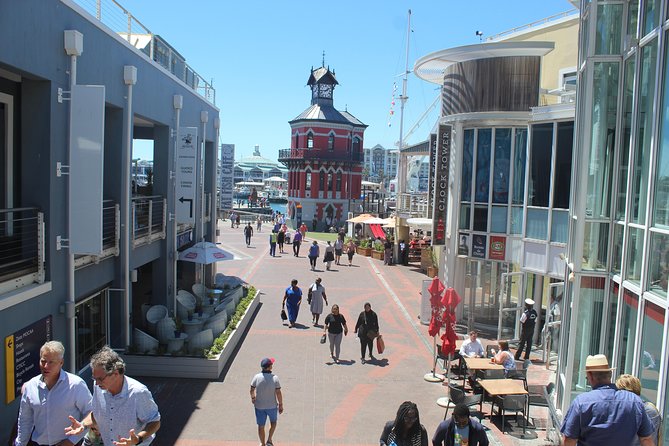
Starting at the V&A Waterfront
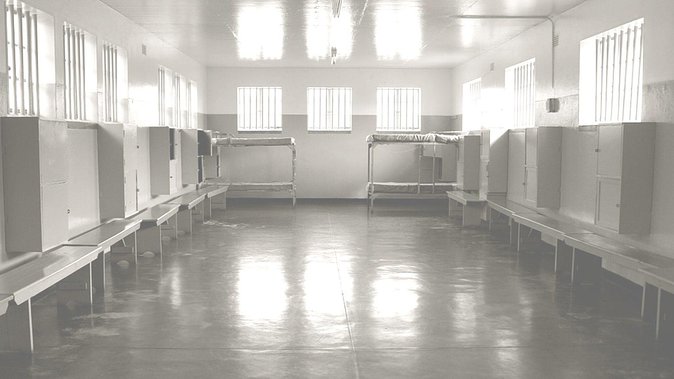
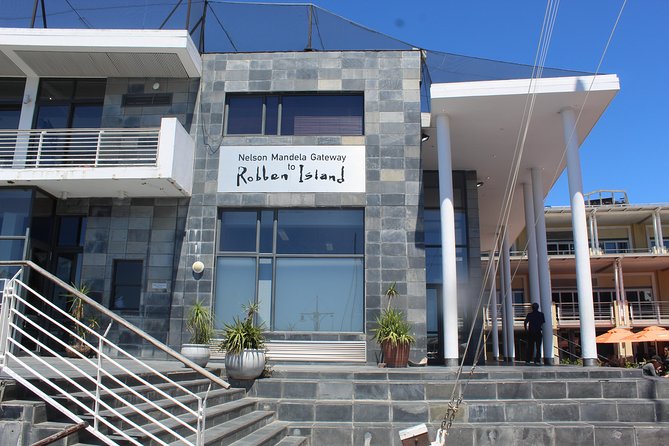
The island portion begins at the Nelson Mandela Gateway at the V&A Waterfront. With the packaged transport, you are picked up from your Cape Town hotel in an air-conditioned vehicle and taken to the waterfront. The listed meeting point is The Silo Hotel at Silo Square, so you should confirm the exact pickup arrangement when booking, especially if your hotel is outside the usual route.
The tour starts at 8:30 a.m. That early start is useful because missing the island departure could disrupt the entire day. One guide, Remmy, has been praised for collecting people early enough to reach the ferry with time to spare. That is an important practical detail, since the island visit depends on the scheduled boat service.
Return ferry tickets are included. You do not need to arrange a separate island crossing, and the tour also covers the return transfer to Langa. Bottled water is provided, but drinks are not included with lunch or elsewhere on the tour.
The group can include up to 24 people. That is not a private tour, but it is small enough for a guide to keep the day organized and answer questions. The vehicle and transfers also make this easier than trying to combine Robben Island and Langa on your own.
The four-hour Robben Island visit
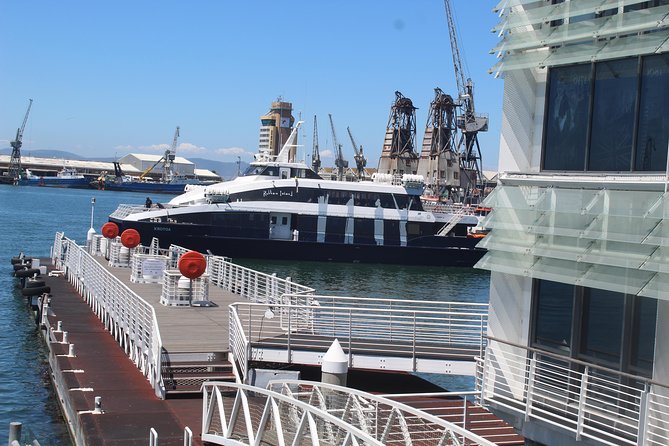
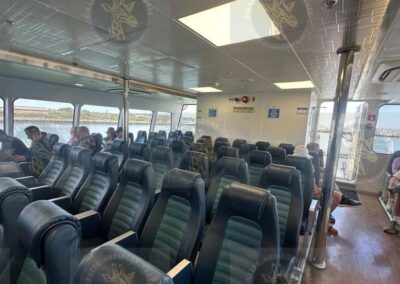
The Robben Island portion is allocated about four hours, including the ferry connection and the museum visit. The island sits in Table Bay, so the boat ride also gives you a useful sense of its physical separation from Cape Town. That distance was part of the prison’s purpose. The island was close enough to the city to be visible, yet isolated enough to control access.
At the museum, you learn about the different uses of the island and its role in apartheid-era imprisonment. The focus is not simply on Mandela. Political prisoners were held there because of their opposition to the apartheid system, and the island became tied to the broader liberation movement.
One of the strongest parts of the experience is the way the setting corrects simplistic ideas about Mandela’s imprisonment. The visit puts his years in context and shows that Robben Island was not a single-person story. You gain a better sense of the other people involved in the struggle and the long period over which political change took place.
The ferry and island visit take a substantial part of the day, so wear comfortable walking shoes and clothing suited to changing weather. The tour requires good weather, and poor conditions can lead to a different date or a full refund. That is not a minor footnote here. A boat-based visit needs a backup plan, especially if Robben Island is one of the main reasons you are coming to Cape Town.
Lunch that connects the history to the present
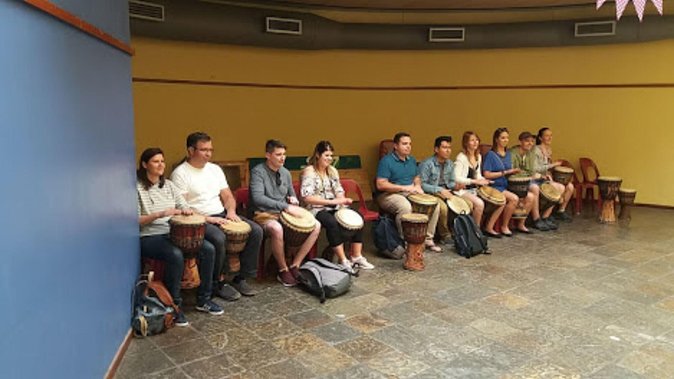
After the island visit, the tour includes about an hour and a half for an African lunch in Cape Town. The meal is part of the value of the outing because it gives the day a pause between two demanding historical settings.
Cape Town restaurants serve food from South Africa, Zimbabwe, Mozambique, Angola, Congo, and Ethiopia. You may also find South African braai, meaning barbecue, along with Cape Malay curry dishes. The exact restaurant and menu are not specified, so you should think of this as an included African meal rather than a guaranteed tasting menu or a fixed list of dishes.
Drinks are not included. If you want anything beyond the supplied bottled water, bring money for that extra cost. The meal is also a useful point to ask your guide about what you have seen so far. A local host such as Remmy can help connect the formal history of Robben Island with daily life in Cape Town.
More Ferry Tickets in Cape Town:
- Robben Island Ferry Ticket and Guided Prison Tour
★ 3.0 · 160 reviews - Cape Town: Robben Island ferry ticket with guided tour
★ 4.0 · 61 reviews - Cape Town: Robben Island ferry ticket plus Guided Tour
★ 3.3 · 37 reviews - Cape Town Half-Day Robben Island Tour with Ferry Ticket
★ 4.5 · 13 reviews
Seeing Langa beyond a quick drive-by
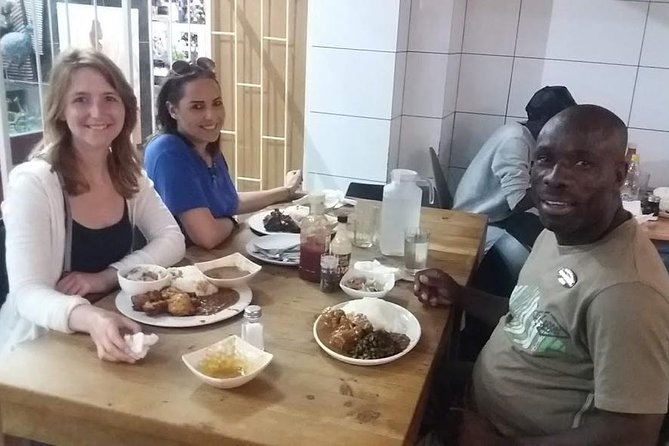
Langa is Cape Town’s oldest township, and its story makes the second half of the tour very different from the island visit. Under apartheid, townships were racially segregated urban areas reserved for Black African, Coloured, and Indian residents. The system shaped where people could live, how they moved through the city, and what opportunities were available to them.
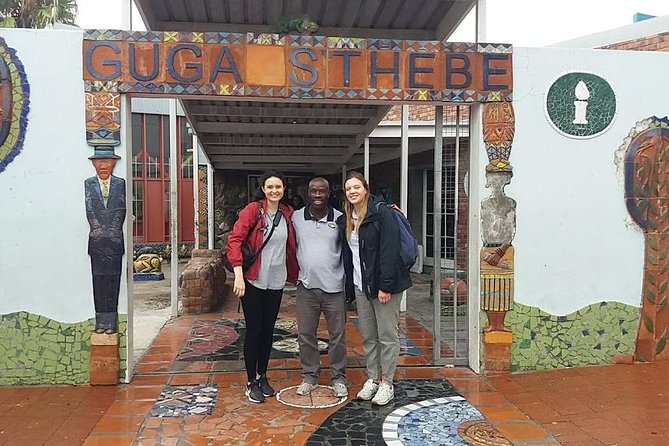
The township visit lasts about two and a half hours. That gives you more time than a brief roadside stop. You visit Gugu S’thebe Cultural Centre and the Arts and Crafts Market, with the chance to see how local cultural work and community activity continue in the area.
The visit is valuable because it shows both the damage caused by apartheid and the strength of communities that lived through it. Langa has faced underdevelopment and the growth of informal settlements, yet it is also described through its sense of belonging, shared identity, and local creativity. You should approach the stop with respect. This is a residential community and a place where people live and work, not a stage built only for sightseeing.
The cultural center gives the visit a clear focus. Rather than simply driving through streets and hearing a few facts, you have a place connected to arts and community life. The market adds a chance to see local crafts. Any purchases are not listed as included, so budget separately if you want to buy something.
Past groups have included 20 students from overseas, and Remmy has been praised for creating a friendly atmosphere while explaining local culture and the wider Cape region. That combination matters. Township tours can feel uncomfortable when the guide presents a community as an object of curiosity. A calm host who explains the past while treating the present with care makes a real difference.
What the guide adds to the day
The operator is Raw African Safaris, and the guide most often named in the supplied information is Remmy, also written as Remi. His role appears to go beyond driving. He has been described as kind, well informed about local culture and the Cape, and careful about getting people to the ferry on time.
That matters because the experience has several moving parts. You need hotel pickup, a waterfront departure, a boat crossing, a museum schedule, lunch, a transfer to Langa, and a final return. A guide who manages timing well can prevent the day from feeling like a string of rushed connections.
You should also expect the Robben Island museum portion to include its own historical interpretation. Your Raw African Safaris guide can give context around the day, but the island visit has its own organized museum operation. That division is normal and useful: you get the official site presentation plus a local host who can connect it to Cape Town.
The guide can also shape how much you learn during the township visit. If you want more than a general overview, ask about Langa’s history, the cultural center, and the links between apartheid-era planning and present-day community life.
Is $196.57 a fair price?
At $196.57 per person, this is not a budget city outing. The price makes more sense once you add up what is included: hotel pickup and drop-off, an air-conditioned vehicle, return ferry tickets, the Robben Island museum visit, the transfer to Langa, an African lunch, and bottled water.
The ferry ticket is especially important. Robben Island visits require a separate boat connection, and arranging the crossing yourself would add another booking task. Here, the operator takes responsibility for connecting it with the township visit on the same day.
You are also paying for time. An eight-hour outing with two major sites and transport between them is a full day of service, not a short guided walk. The value is strongest if you want both Robben Island and Langa but do not want to work out the transport and timing yourself.
The price is harder to justify if you want only Robben Island, prefer a private guide, or would rather explore Cape Town at a slower pace. It is also not ideal for someone who avoids structured group tours. The maximum group size of 24 keeps it manageable, but it does not offer the flexibility of a private vehicle and custom schedule.
Because the experience is commonly booked about 54 days ahead, leaving it until the last minute may be risky. Reserve early if Robben Island is a priority during your Cape Town stay.
Who should choose this tour?
I would recommend it to you if you want a serious introduction to apartheid history and prefer to see both a former political prison and a present-day township. It is particularly useful for first-time visitors who want transport, entry arrangements, and a local guide handled in one booking.
It also suits families with older children, students, and anyone interested in the relationship between political history and daily life. The day offers more than Mandela memorabilia. You see the place of imprisonment, then visit a community shaped by the same system.
You should think twice if you need a relaxed schedule, dislike long days, or want extensive free time for photography and independent wandering. The emotional weight may also be too much for anyone hoping for a purely cheerful sightseeing day.
Wear comfortable walking shoes. Most travelers can participate, and service animals are allowed. The exact pace can depend on ferry timing, weather, traffic, and the group, so keep your plans after the tour flexible.
Should you book it?
Book this tour if you want the efficient version of a major Cape Town history day: Robben Island, Mandela’s cell, Langa Township, an African lunch, hotel transfers, and a guide such as Remmy who can help tie the pieces together.
Skip it if your main goal is a private, slow-paced visit or if you only want the island. For everyone else, the pairing is worthwhile. Robben Island explains the machinery of apartheid imprisonment, while Langa helps you see how that past shaped a real community. That contrast gives the day its purpose.
FAQ
How long does the tour last?
The tour lasts about eight hours.
What time does the tour start?
The listed start time is 8:30 a.m.
Is hotel pickup included?
Yes. Pickup from your hotel and drop-off after the tour are included.
Are Robben Island ferry tickets included?
Yes. Return tickets from the Nelson Mandela Gateway at the V&A Waterfront are included.
What will I see on Robben Island?
You will visit the Robben Island Museum and see Nelson Mandela’s prison cell. The island’s wider history includes its use as an animal quarantine station, a leper colony, and a prison for political prisoners.
What happens during the Langa Township visit?
You will visit Langa Township, including Gugu S’thebe Cultural Centre and the Arts and Crafts Market. The tour explains apartheid-era township segregation and how the community has developed since then.
Is lunch included?
Yes. An African lunch at an African restaurant is included. Drinks are not included.
How large is the group?
The activity has a maximum of 24 participants.
Can I cancel for a full refund?
You can cancel at least 24 hours before the start time for a full refund. Cancellations or changes made less than 24 hours before the start time are not accepted for a refund. If poor weather or too few bookings causes the tour to be canceled, you will be offered another date or a full refund.
More museum visits in Cape Town
- Nelson Mandela’s Robben Island Prison Museum Cape Town City Tour + Ferry Tickets
★ 5.0 · 7 reviews - Robben Island Museum Stellenbosch Wineries Plus Ferry Ticket F/D
★ 5.0 · 6 reviews - Robben Island Museum, Stellenbosch Wineries plus Ferry Tickets
★ 5.0 · 4 reviews - ROBBEN ISLAND MUSEUM TOUR, WITH OPTIONAL LAST MINUTE TICKETS
★ 3.4 · 85 reviews
New ferry trips in Cape Town
- Robben Island Museum, Stellenbosch Wineries plus Ferry Tickets★ 5.0 · 4 reviews
- Robben Island Cape Of Good Hope Penguins Including Ferry Ticket★ 5.0 · 3 reviews
- Nelson Mandela’s Robben Island Prison Museum Cape Town City Tour + Ferry Tickets★ 5.0 · 7 reviews
- Cape Town Half-Day Robben Island Tour with Ferry Ticket★ 4.5 · 13 reviews
- Robben Island Museum Stellenbosch Wineries Plus Ferry Ticket F/D★ 5.0 · 6 reviews
- Cape Town: Robben Island ferry ticket with guided tour★ 4.0 · 61 reviews
- Cape Town: Robben Island Ferry and Guided Tour★ 3.0 · 7 reviews
- Cape Town-Robben Island Ferry Ticket and Guided Prison Tour★ 3.5 · 7 reviews
Landmark Island Ferry Tickets, compared.


Statue of Liberty and Ellis Island Guided Tour with Ferry
Read our review →
Robben Island Ferry Ticket and Guided Prison Tour
Read our review →
Robben Island Ferry Tour with 1-Way Hotel Pickup
Read our review →
Robben Island Ferry with Prison Ticket and Tour
Read our review →Lists this crossing appears in