
REVIEW · LANDMARK ISLAND FERRY TICKETS
Nelson Mandela’s Robben Island Prison Museum Cape Town City Tour + Ferry Tickets
Robben Island is the heart of this day. You cross from the V&A Waterfront to the former prison where Nelson Mandela spent 18 of his 27 years in captivity, then return to Cape Town for a tightly packed look at the city’s apartheid-era story and colonial landmarks. The prison visit is led by a former warder or prisoner, which gives the experience a direct human voice.
I like two things right away: the small group of no more than eight and the included ferry, museum entries, and air-conditioned transport. You do not need to piece together several taxis or worry about buying separate tickets. I also like the range of stops, from the painful story of District Six to the colorful streets of Bo-Kaap and the old Dutch fort.
The main drawback is the pace. Eight hours covers a lot of ground, but it leaves limited time for slow wandering, a proper lunch, or long visits inside each site. Robben Island ferry schedules and weather can also shape the day, so this is best for you if you want broad coverage rather than a relaxed, single-site visit.
Key points to know before booking
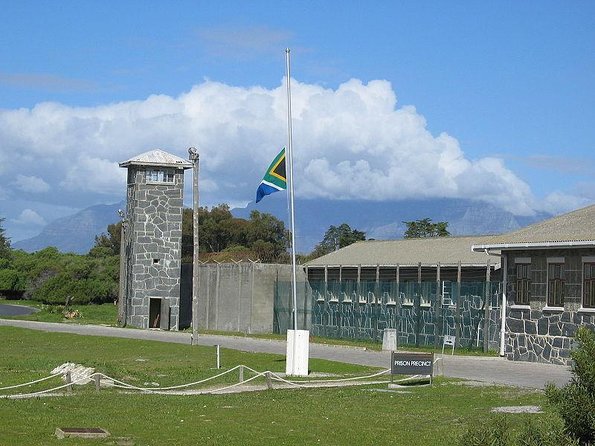
- Robben Island takes the emotional center of the day: You visit the prison and the cell associated with Nelson Mandela.
- A former prisoner or warder leads the island tour: The subject is presented through personal experience, not only museum labels.
- The group is capped at eight people: That is a useful size for transport and questions.
- Five major Cape Town sights fit into one outing: Bo-Kaap, Company’s Garden, the Castle of Good Hope, District Six Museum, and Robben Island are all included in the plan.
- Hotel pickup and drop-off reduce city logistics: Confirm the exact pickup arrangement, since the stated meeting point is at The Silo Hotel in the V&A Waterfront.
- Lunch and drinks are extra: Set aside time and money for a meal after returning from the island.
Why Robben Island gives this Cape Town tour its weight
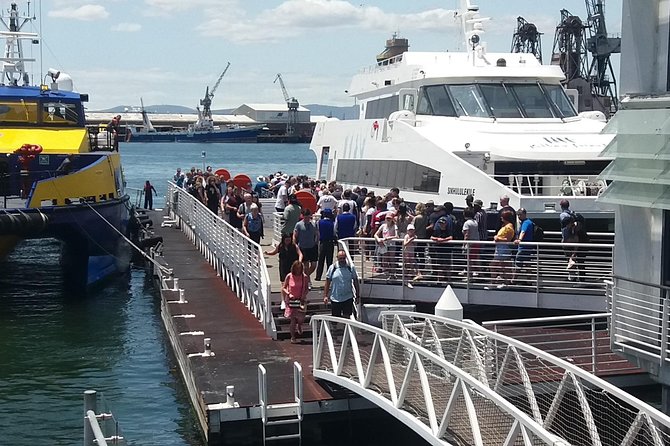
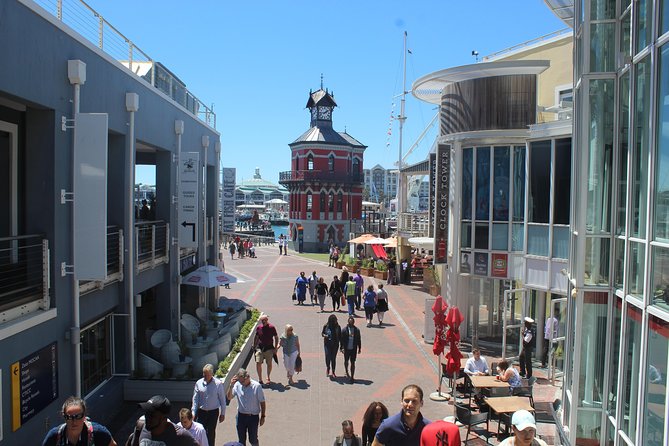
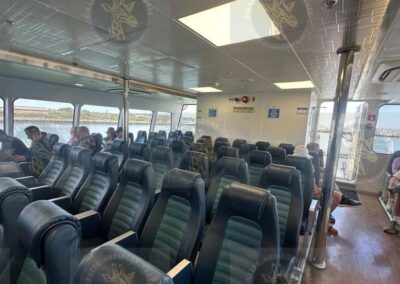
You begin at the Nelson Mandela Gateway near the Clock Tower at the V&A Waterfront, with a stated start time of 8:30 a.m. From there, the ferry carries you across to Robben Island. The crossing itself gives you a physical sense of the separation between Cape Town and the prison site, though the timetable and sea conditions can affect the exact rhythm of the morning.
Robben Island served different purposes over time. It was used as a leper colony and as a place of banishment, isolation, and imprisonment before becoming internationally linked with the apartheid government. The prison is not presented as a simple monument to one famous man. It represents the wider system of political imprisonment and the harsh conditions imposed on people fighting for freedom.
Nelson Mandela spent 18 years of his 27-year prison sentence on Robben Island. Seeing the cell connected with that period is sobering because the space is so ordinary and confined compared with the global importance of the person who lived there. I would expect this part of the day to feel quiet and serious rather than entertaining.
The island tour is conducted by either a former prison warder or a former prisoner. That detail matters. A guide with personal experience can explain the routines and atmosphere of imprisonment in a way that a standard city guide cannot. The exact guide is not guaranteed, so treat the personal account as a feature of the program rather than a promise of a particular individual.
Allow about four hours for the Robben Island portion, including the ferry journey, island touring, and return to the Waterfront. That is nearly half the day, and rightly so. If your main reason for booking is Nelson Mandela and the political story of South Africa, this is where the price begins to make sense.
More landmark island ferries in Cape Town:
- Cape Town: Robben Island Ferry Ticket and Guided Prison Tour
★ 4.1 · 1,792 reviews - Cape Town: Robben Island Ferry Tour with 1-Way Hotel Pickup
★ 4.2 · 1,380 reviews - Cape Town: Robben Island Ferry Ticket and Townships Tour
★ 4.5 · 400 reviews
The practical value of a small group and included transport
The tour is designed for a maximum of eight people. That is a better setup than a large coach for a day with several stops. You can get in and out of the vehicle more quickly, ask questions without shouting across a bus, and spend less time waiting for a whole crowd.
An air-conditioned vehicle is included for the Cape Town portion. The city’s sights are spread out, and private transport saves you from working out separate rides between the Waterfront, Bo-Kaap, central Cape Town, and District Six. Hotel pickup and drop-off are also offered, although the published meeting details name The Silo Hotel, Silo Square, at the V&A Waterfront as the starting point.
I would confirm your pickup address after booking. The information says both that pickup is offered and that the activity starts at The Silo Hotel, so the exact arrangement may depend on your hotel and the operator’s route for the day. The provider is Raw African Safaris, and past tour accounts identify Remmy as the owner or guide and Kuda as a driver on one private outing. Names and assignments can change, but those details suggest a personal, operator-led service rather than a large anonymous bus operation.
The included bottled water is a small but useful touch. Lunch and drinks are not included, so do not assume food is covered by the tour price. You return to the Waterfront after Robben Island and are scheduled for lunch before continuing, but you pay for that meal yourself.
Bo-Kaap and the Cape Malay story
Bo-Kaap brings a sharp change of mood after Robben Island. The neighborhood is known for brightly painted homes and cobblestoned streets, but its importance is not just visual. It is traditionally a multicultural area with a predominantly Muslim community, often called the Cape Malay Quarter.
The name points to the history of people brought to the Cape from Malaysia, Indonesia, and other parts of Africa under colonial rule. A short visit here gives you a starting point for understanding how Cape Town’s communities were formed through migration, slavery, religion, and colonial power.
The scheduled stop lasts about one hour. That is enough to see the streets and hear the main context, but not enough for an unhurried neighborhood visit. I would treat this as a guided introduction rather than a deep exploration. The colorful houses make for good photographs, yet the guide’s explanation of the area’s people and past is more important than the painted facades.
Because Bo-Kaap is a lived-in neighborhood, approach it with care. You are seeing a community, not a themed display. The tour’s advantage is that you receive context before moving on, instead of simply taking pictures and leaving without understanding why the area matters.
Company’s Garden, a food station turned city park
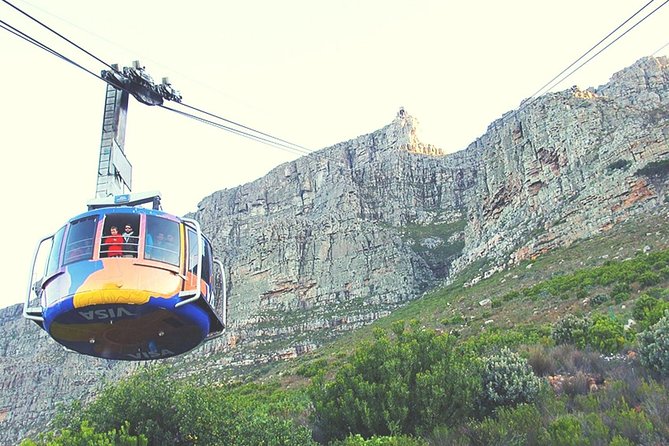
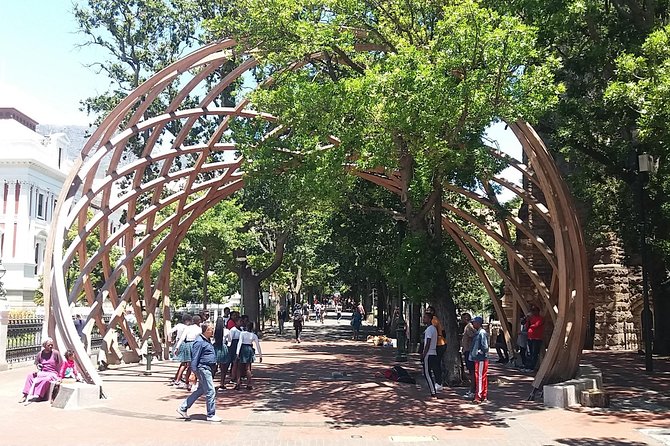
Company’s Garden is one of the calmer stops. The gardens began in the 1650s as a refreshment station created by the Dutch East India Company. Ships sailing around the southern tip of Africa stopped to take on fresh vegetables, fruit, and water after long periods at sea.
That practical purpose explains the name. This was not first designed as a leisure park for city residents. It was part of the supply system that helped ships continue toward the East. Today, the park contains memorials, statues, and monuments that connect the site to Cape Town’s colonial and civic past.
You have about an hour here, with no admission fee. I like this stop because it gives your day some breathing room after the intensity of Robben Island. It also helps connect the city’s modern center with its early colonial development.
Do not expect a full botanical tour unless the guide’s timing allows it. The schedule includes several major sights, so your visit will likely focus on the garden’s role and visible monuments. If you prefer natural spaces or want a longer break, this is one place where you may wish for more time.
More Ferry Tickets in Cape Town:
- Robben Island Ferry Ticket and Guided Prison Tour
★ 3.0 · 160 reviews - Cape Town: Robben Island ferry ticket with guided tour
★ 4.0 · 61 reviews - Cape Town: Robben Island ferry ticket plus Guided Tour
★ 3.3 · 37 reviews - Cape Town Half-Day Robben Island Tour with Ferry Ticket
★ 4.5 · 13 reviews
The Castle of Good Hope and Dutch colonial power
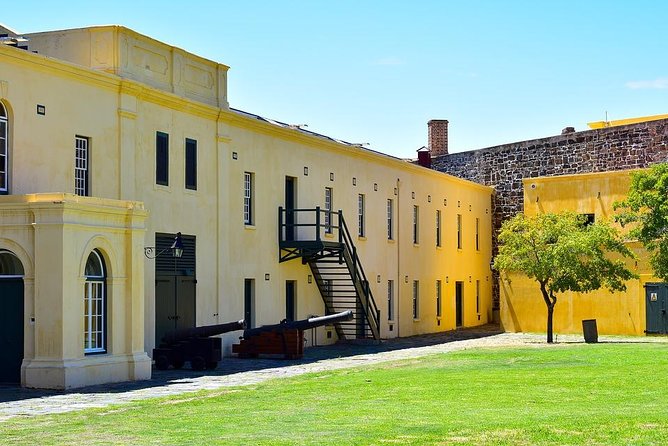
The Castle of Good Hope is the oldest standing colonial building in South Africa. The Dutch built it between 1666 and 1679, and it served as a center for civilian, political, religious, and military life at the Cape from about 1679.
The building also gives you a clearer view of colonial power as an organized system. It was not simply a pretty old structure. It was a fort, an administrative center, and a symbol of control over the settlement and its trade routes.
Admission is included, and the scheduled visit lasts about an hour. The complex contains the William Fehr Collection, the permanent Fired ceramic exhibition, and a military museum. The surviving 17th-century Dutch East India Company architecture is the main draw, but the collections help fill out the story.
One hour is useful for an introduction, though it will not allow a slow examination of every room and display. If forts and military history are your main interest, you may leave wanting more. For a first visit to Cape Town, however, it is a sensible stop because it places the city’s colonial foundations alongside the later apartheid sites seen elsewhere in the day.
District Six Museum and the cost of forced removal
District Six Museum is the most direct stop for understanding forced removals under apartheid. It was established in 1994 as a memorial to the roughly 60,000 multicultural residents removed from District Six after the area was declared for removal by the apartheid government.
The removals began after the 1966 declaration, with the museum preserving the memory of the former inner-city neighborhood and the people who lived there. This is not a general apartheid museum. Its focus is personal and local: homes, families, community life, and the destruction of a mixed neighborhood through state policy.
The visit is planned for about one hour, and entry is included. I would expect this to be another emotional part of the day, though in a different way from Robben Island. The prison shows confinement and political punishment. District Six shows what happened to an entire community when the government decided where people were allowed to live.
The museum works best when you take time to listen to the guide and read the displays rather than rushing through for photographs. Since the tour already includes Robben Island, you will hear difficult material throughout the day. That is a reason to choose this experience for its historical value, and also a reason to avoid booking it on a day when you want only light sightseeing.
What the $171.49 price includes
At $171.49 per person, this is not a budget city tour. The price becomes more reasonable when you count the ferry, Robben Island admission, the small group, hotel transport, the air-conditioned vehicle, and entry to both District Six Museum and the Castle of Good Hope.
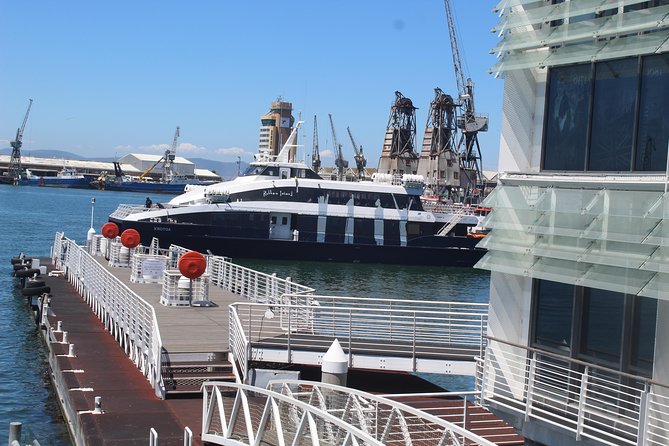
The ferry alone is an important part of the cost and logistics. Robben Island is not a site you can reach by road, and missing the sailing would disrupt the whole day. Having the island transport arranged removes one major source of worry.
You also get several different types of experience for one fare:
- A ferry trip and prison museum visit
- A guided look at Bo-Kaap
- A historic city park
- A colonial fort and museum collections
- An account of District Six and forced removals
- Transport between sites and hotel drop-off
The value depends on how much of Cape Town you want to cover in one day. If you would rather spend a full morning at Robben Island and explore the city on foot later, a shorter island-focused option may suit you better. If you have limited time in Cape Town, this package makes good use of one long day.
The included details also list admission to a Diamond Museum, but no separate diamond museum stop appears in the described route. I would ask Raw African Safaris to clarify whether that entry is used during this tour or belongs to another version of the program. That small check can prevent confusion on the day.
Pace, weather, and other practical points
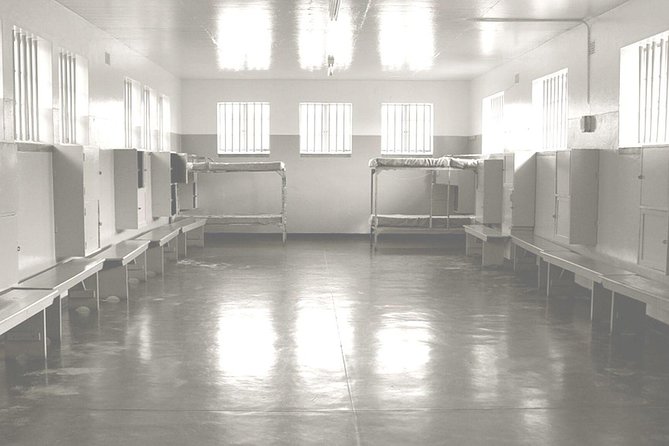
The total duration is about eight hours. That is a full day, especially with a start at 8:30 a.m. and several emotionally demanding sites. Wear comfortable shoes and plan for changes between outdoor walking, museum visits, ferry travel, and vehicle time.
The experience requires good weather. If poor weather causes cancellation, you are offered another date or a full refund. The tour also requires a minimum number of participants, and the same options apply if that minimum is not met.
Free cancellation is available if you cancel at least 24 hours before the start time. Cancellations or changes made within 24 hours are not refunded or accepted. The activity is near public transportation, service animals are allowed, and most people can participate according to the supplied information.
The small group is a major practical advantage, but it does not make the day flexible. Ferry departure times and the number of scheduled stops set the basic structure. I would keep the evening free rather than booking a fixed dinner or another timed attraction immediately afterward.
Who should book this Cape Town day tour?
I would choose this tour if you want Cape Town’s major political and historical sites in one organized day. It suits first-time visitors, people with limited time, and anyone who values a guide’s explanation more than independent wandering.
It is particularly strong for you if Robben Island is a priority. The island visit is not an add-on squeezed into a short city tour. It receives about four hours, with the ferry and prison experience forming the center of the day.
I would be more cautious if you want a slow, photographic city tour, a long lunch, or extended time in one neighborhood. Bo-Kaap, Company’s Garden, the Castle, and District Six each deserve longer than the timetable allows, so the day gives you an informed overview rather than a leisurely stay.
Past accounts also point to strong personal attention from Remmy and careful help with getting to the dock on time. One account describes a booking problem that was resolved quickly by Remmy, while others praise his care and the memorable nature of the island visit. That does not remove the need to confirm your pickup and ferry details, but it suggests the operator takes service seriously when something goes wrong.
Should you book it?
Book this tour if you want the most important pieces of Cape Town’s political and colonial story brought together without handling every ticket and transfer yourself. The combination of Robben Island, District Six, Bo-Kaap, Company’s Garden, and the Castle gives you a strong first framework for the city.
Skip it if you prefer to set your own pace or if you have already visited Robben Island and District Six. At $171.49, the value rests on the ferry access, included admissions, small group, and convenience of transport. For a first Cape Town visit with one full day available, those pieces make the cost defensible.
FAQ
How long does the tour last?
The tour lasts approximately eight hours.
What time does the tour start?
The stated start time is 8:30 a.m.
Where does the tour begin?
The listed meeting point is The Silo Hotel at Silo Square in the Victoria and Alfred Waterfront. Hotel pickup is also offered, so confirm the exact arrangement with the operator.
Is the Robben Island ferry included?
Yes. The price includes a return ferry ticket from the Nelson Mandela Gateway at the Clock Tower to Robben Island.
Is admission to Robben Island included?
Yes. The Robben Island Museum visit and admission are included.
Is lunch included?
No. Lunch and drinks are not included. You should budget separately for your meal after returning to the Waterfront.
What other admissions are included?
Admission to District Six Museum and the Castle of Good Hope is included. The supplied information also lists entry to a Diamond Museum, but does not identify a separate Diamond Museum stop in the route, so ask the operator for clarification.
How many people can join the tour?
The tour has a maximum of eight participants.
More museum visits in Cape Town
- Robben Island Nelson Mandela’s Prison Museum + Township Tour incl Ferry Tickets
★ 5.0 · 9 reviews - Robben Island Museum Stellenbosch Wineries Plus Ferry Ticket F/D
★ 5.0 · 6 reviews - Robben Island Museum, Stellenbosch Wineries plus Ferry Tickets
★ 5.0 · 4 reviews - ROBBEN ISLAND MUSEUM TOUR, WITH OPTIONAL LAST MINUTE TICKETS
★ 3.4 · 85 reviews
New ferry trips in Cape Town
- Robben Island Nelson Mandela’s Prison Museum + Township Tour incl Ferry Tickets★ 5.0 · 9 reviews
- Robben Island Museum, Stellenbosch Wineries plus Ferry Tickets★ 5.0 · 4 reviews
- Robben Island Cape Of Good Hope Penguins Including Ferry Ticket★ 5.0 · 3 reviews
- Cape Town Half-Day Robben Island Tour with Ferry Ticket★ 4.5 · 13 reviews
- Robben Island Museum Stellenbosch Wineries Plus Ferry Ticket F/D★ 5.0 · 6 reviews
- Cape Town: Robben Island ferry ticket with guided tour★ 4.0 · 61 reviews
- Cape Town: Robben Island Ferry and Guided Tour★ 3.0 · 7 reviews
- Cape Town-Robben Island Ferry Ticket and Guided Prison Tour★ 3.5 · 7 reviews
Landmark Island Ferry Tickets, compared.


Statue of Liberty and Ellis Island Guided Tour with Ferry
Read our review →
Robben Island Ferry Ticket and Guided Prison Tour
Read our review →
Robben Island Ferry Tour with 1-Way Hotel Pickup
Read our review →
Robben Island Ferry with Prison Ticket and Tour
Read our review →Lists this crossing appears in