
REVIEW · HISTORICAL TOURS
Harpers Ferry Audio Tour History, Ruins and River Views
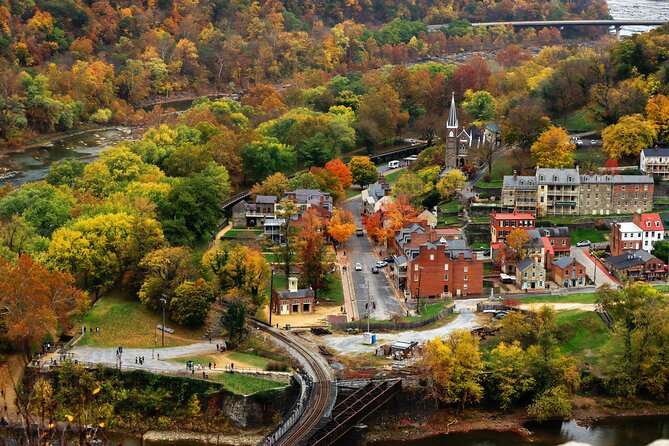
Harpers Ferry packs American history into a small, steep town where two rivers meet. This audio tour leads you from the Appalachian Trail headquarters and old armory grounds to John Brown’s Fort, Civil War overlooks, industrial ruins, and the former Storer College campus. The setting does much of the teaching: look across the water, up the wooded slopes, or down at old foundations, and the past feels close at hand.
I like the tour’s GPS-triggered narration, which starts the next story as you reach each place, and its freedom to let you stop, read markers, and take photos at your own speed. I also like the broad subject range, from Black education at Storer College to the town’s weapons industry and railroad history. The main catch is the route’s hills and scattered stops. Two hours is a useful estimate, but you may need more time or may choose to skip sections.
Key points to know before you go
- John Brown, Storer College, and river history share one route: The tour connects major events instead of treating Harpers Ferry as a single-story town.
- The app responds to your location: Audio begins as you reach many stops, so you can keep your phone in hand and focus on the site.
- The walk includes uphill sections and stairs: The Appalachian Trail staircase and higher overlooks add effort.
- Download the tour before arrival: Cell service can be spotty, and the app works best when prepared in advance.
- The African American history museum is closed for renovations: Its subject remains important, but you should not expect to enter it during this tour.
- The $9.99 price covers one person: Children 10 and under are free, and your group uses a private self-guided experience.
A town shaped by rivers, rifles, and rebellion
Harpers Ferry is not a place to see from a moving vehicle. The town’s meaning comes from its position. The Potomac and Shenandoah Rivers meet here, steep ridges hem in the streets, and old routes for rail, water, and foot traffic converge in a tight area.
This audio walk makes good use of that setting. You hear one story at a cemetery, another beside an old foundation, and another from a lookout where the terrain explains why the town mattered. The narration gives you a thread to follow, but you still have room to wander a little, study plaques, and make sense of the views.
The experience is private and self-guided. You do not join a fixed group or follow a guide with a flag. You bring your own smartphone, download the app and tour, then begin at the Lower Town Train Station at 182 Potomac Street. The stated operating window is 8:00 AM to 8:00 PM, every day, from July 31, 2025, through March 6, 2027.
More history trips in the USA:
- Boston Historic Taverns Tour with Tastings and Ferry
★ 5.0 · 156 reviews - Boston: Historic Pubs Walking & Ferry, Food & Drink Tour
★ 4.9 · 56 reviews - Halifax: Georges Island National Historic Site Ferry Ticket
★ 4.9 · 28 reviews
Starting at the Lower Town Train Station
The station is a sensible starting point because it introduces Harpers Ferry as a transportation center, not simply a scenic village. It remains active today, and its survival points to the town’s former importance as a rail link.
From here, the route moves through Lower Town and then reaches a long list of historic sites. The app uses your location to trigger audio, a feature I find useful in a place where it is easy to look up at a building, down a side street, or toward the river and lose your place.
The app’s map takes a little attention. You need to select the tour to find the map, and the locations are not labeled as clearly as they could be. You can technically begin from another point, but the story works best in order. Start at the station, give the app a moment to load, and keep the map available.
The Appalachian Trail connection and Harper Cemetery
The first stop is the Appalachian Trail Conservancy Headquarters, a welcoming introduction to the 2,190-mile trail. Calling this the trail’s symbolic midpoint gives the tour a useful sense of scale. You are not just walking through an old town. You are also standing beside one of America’s best-known long-distance footpaths.
The stop takes about 10 minutes and has no admission fee. It helps set up the physical side of the day: Harpers Ferry rewards walking, but its slopes also demand honest planning.
Harper Cemetery sits above town and offers a quieter pause. Soldiers, local residents, and other important figures are buried here, while the higher position gives you wide views over Harpers Ferry. The stop itself is brief, about five minutes, but the combination of graves and scenery gives the narration a more personal tone.
The armory grounds and John Brown’s Fort

The U.S. Armory Site is one of the tour’s most important stops. Once a major weapons factory, it later became linked to John Brown’s 1859 raid, an event that helped sharpen the national argument over slavery. Today, the remaining foundations require some imagination, which is exactly where the audio guide earns its keep.
Do not expect a complete factory complex. You see fragments and open ground. The narration helps you picture the scale and explains why this location mattered.
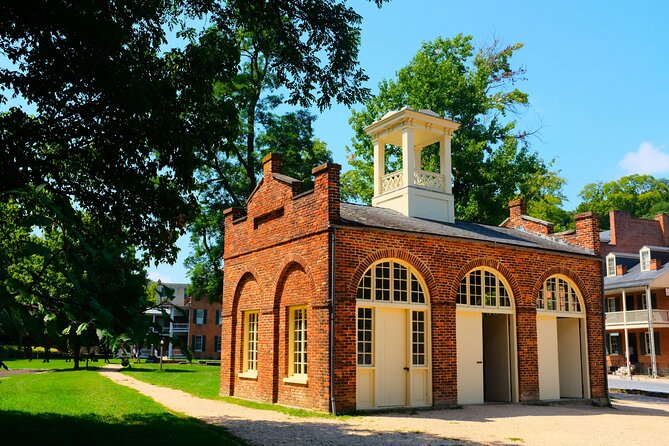
Arsenal Square continues that story. It is quieter now, but the open space carries the memory of the arsenal and the violent opening of Brown’s raid. John Brown’s Fort is the emotional center of this section. The modest brick building served as a fire engine house and became Brown’s final stronghold.
The building is small. The story is not. This is one of those places where five minutes can feel longer because the setting is plain, the event was dramatic, and the consequences reached far beyond Harpers Ferry.
More self-guided island days in the USA:
- Fort Sumter Admission and Self-Guided Tour with Roundtrip Ferry
★ 4.5 · 3,343 reviews - San Francisco: Alcatraz Ticket, Ferry, & Self-Guided App
★ 4.5 · 2,460 reviews - San Francisco: Alcatraz, Ferry & Audio Tour w/ Night Option
★ 4.4 · 617 reviews - Alcatraz Inside Access Ferry and Audio Tour with Night Option
★ 4.0 · 138 reviews
Museums, public spaces, and the town’s everyday past
The Harpers Ferry Historical Museum occupies an old building in Lower Town. Its exhibits and artifacts cover everyday life as well as major events, giving you a break from outdoor ruins and overlooks. Set aside about 10 minutes if you want to look beyond the best-known names and battles.
The African American history museum is currently closed for renovations. That matters because the subject is central to understanding Harpers Ferry. The town’s story includes enslaved people, freed people, education, resistance, and community life, not only John Brown and the Civil War. You can still hear related history at other stops, especially Lockwood House and Storer College, but you should not count on visiting this museum during your walk.
Harpers Ferry Public Square brings you back to the town’s civic life. Markets, protests, parades, and military activity once filled this space. It is a useful reminder that history did not happen only in grand buildings. It also happened where people met, argued, traded, and watched events unfold.
White Hall Tavern offers another everyday angle. This 19th-century tavern served travelers, residents, and Union soldiers. The stop is short, but it helps you picture the town as a working community with conversation, food, drink, and politics, not only as a battlefield or monument.
Jefferson Rock and the uphill side of Harpers Ferry
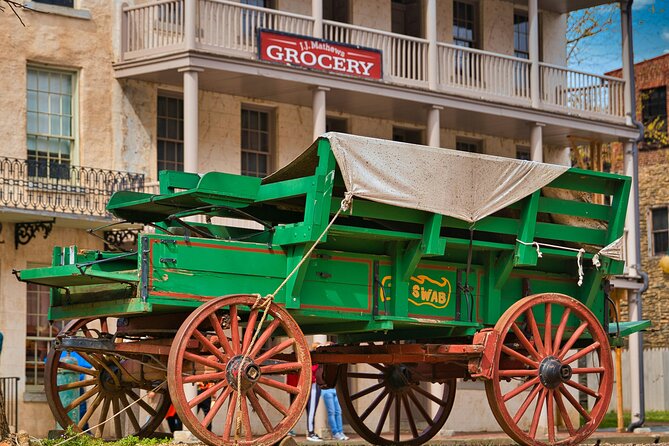
Jefferson Rock is one of the most memorable viewpoints on the route. Named for Thomas Jefferson, the rocky perch looks over the meeting of town, river, and wooded slopes. The view explains why the site caught Jefferson’s attention and why Harpers Ferry has long attracted people who want to see the terrain from above.
The route also includes the Appalachian Trail staircase, a steep stairway cut into the hillside between Lower Town and the trail. It is scenic, but it is not a minor detail. One person who began the tour enjoyed the stops but did not finish because the uphill walking became too much.
That is useful advice. The audio format lets you move at your own pace, but it cannot remove the hills. Wear shoes suited to stairs and uneven walking, and allow extra time if you need frequent rests. The route is not presented as a fully level walk.
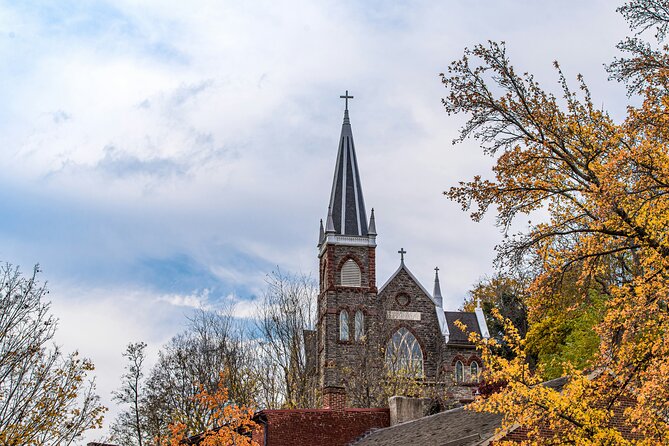
St. Peter’s Roman Catholic Church is another high hillside stop. The stone church served Irish immigrant families and survived the Civil War. Its position gives you another angle on the town while its history adds a story of community, faith, and shelter.
Lockwood House and Storer College
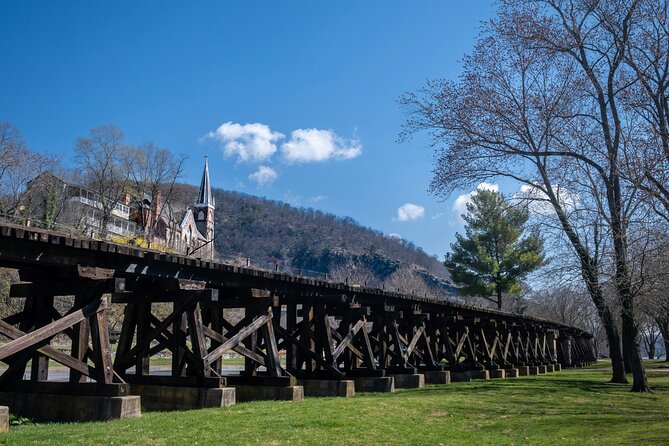
Lockwood House links military history with Black education. The building once housed Union officers and later leaders connected with Storer College. That change in use reflects the larger shift from wartime occupation to Reconstruction and education.
Storer College deserves careful attention. Founded after the Civil War to educate formerly enslaved people, it became a center for learning, leadership, and civil rights activity. The campus is not just another set of old buildings. It shows how education became a practical tool for people building new lives after slavery.
These stops help correct an easy mistake in Harpers Ferry: treating the town as mainly the setting for John Brown’s raid. Brown’s story is essential, but it is only one part of the town’s identity. The college campus gives the route a longer view of freedom, opportunity, and Black leadership.
The Point, the bridge, and Virginius Island
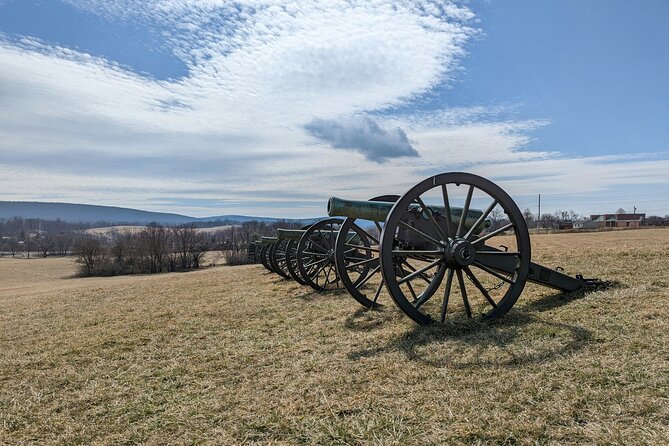
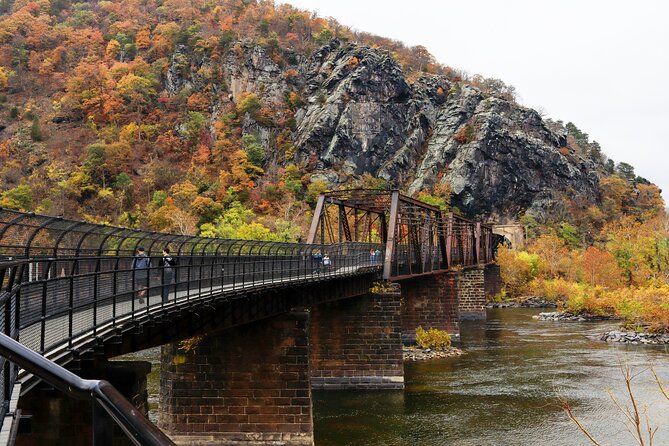
At The Point, the Potomac and Shenandoah Rivers meet. This is the clearest place to understand Harpers Ferry’s geography. Trade routes, military movement, transportation, and industry all benefited from the location, while the surrounding ridges made the town strategically important.
The original site of the Shenandoah River bridge connects the modern view to Robert Harper’s 18th-century ferry. That ferry helped launch the settlement’s role as a crossing point. The stop is brief, but the basic idea is important: Harpers Ferry grew because people needed to get across the rivers.
Virginius Island offers a different mood. The former industrial village is now a quiet woodland with moss-covered ruins and trails. Water power once drove the local economy, and the remaining foundations show how industry occupied the river’s edge.
This section asks you to look closely. The ruins are not grand monuments, and some may be easy to miss without the audio explanation. Give yourself time to notice the walls, channels, and scattered remains rather than rushing from one trigger point to the next.
Murphy Farm and Bolivar Heights
Murphy Farm carries two very different memories. It was a battlefield, then a place connected with important Civil Rights speeches. Today, it offers open views and room for thought. The contrast makes it one of the route’s more meaningful stops.
Bolivar Heights adds the military view. The ridge was fought over repeatedly during the Civil War, and its height shows why control of the area mattered. From here, scenery and strategy come together. You can see why commanders cared about ridgelines, river crossings, and the narrow approaches to town.
The route’s wide geographic reach is both a strength and a challenge. These overlooks add context that you cannot get from Lower Town alone, but they also contribute to the walking time. If you want to hear every stop, plan for more than the approximate two-hour duration.
How the audio system works in real use
The tour includes the app download, unlimited access, and an audio guide. Once you reach a location, the phone can recognize where you are and begin the related narration. This leaves you free to walk, look around, and read historic markers instead of constantly checking a schedule.
The strongest part of the system is its flexibility. You can pause, move at your own speed, and take breaks without holding up a group. A self-guided tour also works well for families or private groups who want to talk among themselves.
The weak point is the interface. The map is reached through a button at the bottom of the screen, but it may not be obvious at first. Stop labels could be clearer, and the free-form layout can feel awkward if you are unsure which direction to take.
Download everything before you arrive. Cell service is spotty at best, and depending on a live connection could make the walk frustrating. Children 10 and under are free, which improves the price for families, though the hills may matter more than the ticket cost.
Is $9.99 a fair price?
At $9.99 per person, the tour is reasonably priced if you want a structured introduction without paying for a private human guide. You get unlimited access to the audio tour and can spend more time at the stops that interest you most.
The value is best for a first visit. The narration connects scattered sites and gives context to ruins that might otherwise look like piles of old stone. It is less useful if you already know Harpers Ferry well or prefer to explore with no planned route.
The two-hour estimate should be treated as a baseline. Nineteen stops spread across Lower Town, the hills, Virginius Island, Murphy Farm, and Bolivar Heights can make a full completion feel brisk. You may want to listen to the most important sections and return to the rest later.
Who should book this Harpers Ferry walk?
I would choose this for independent visitors who want history but do not want a fixed group schedule. It suits people who enjoy combining short audio chapters with outdoor views, old foundations, cemeteries, museums, and town streets.
It is also a good fit for families with older children who can manage hills and stairs. The automatic location triggers add a little technology without requiring a live guide, and the free admission for children 10 and under helps keep the cost down.
I would be cautious if you have difficulty with uphill walking or want a ride between stops. One part of the route can feel like too much on foot, and the audio tour does not provide a trolley or shuttle. You can stop early, but the full story depends on covering a fairly broad area.
Should you book it?
Book this tour if you want a low-cost, private way to connect Harpers Ferry’s major stories. The best reasons are the automatic location-based audio, the mix of John Brown, Black education, industry, railroads, and Civil Rights history, and the freedom to set your own pace.
Skip it if you need a fully level route, a live guide, or a clearly labeled map from the first tap. For everyone else, download the tour before leaving home, begin at the Lower Town Train Station, keep the map handy, and plan on taking longer than two hours if you want to see all 19 stops properly.
FAQ
How much does the Harpers Ferry audio tour cost?
The tour costs $9.99 per person. Children 10 and under are free.
How long does the tour take?
The estimated duration is about two hours. Completing every stop at a relaxed pace may take longer because the route includes hills, stairs, and several areas outside Lower Town.
Where does the tour start?
The tour starts at the Lower Town Train Station, located at 182 Potomac Street, Harpers Ferry, West Virginia 25425.
Where does the tour end?
The activity ends back at the meeting point, the Lower Town Train Station.
Is the tour guided in person?
No. This is a private, self-guided audio tour for your own group. It uses a mobile app and location-based audio.
What language is offered?
The tour is offered in English.
Do I need to bring a smartphone?
Yes. A smartphone is not included, so you need to bring your own device.
Should I download the tour before arriving?
Yes. Cell service can be spotty at best, so downloading the app and tour before you go is strongly advised.
Can I cancel for a full refund?
Yes. You can cancel at least 24 hours before the experience start time for a full refund. Cancellations made less than 24 hours before the start time are not refunded, and changes within that period are not accepted.
More audio tours in the USA
- Gozo Day Pass Ferry and Hop-on Hop-off buses with audio Tour
★ 3.0 · 19 reviews
New ferry trips in the USA
- NYC: Brooklyn Bridge and DUMBO Tour with East River Ferry★ 4.9 · 28 reviews
- Old Town Alexandria in a Day with Round Trip Ferry Cruise★ 4.5 · 17 reviews
- San Francisco Food Tour: Ferry Building and Ferry Plaza Farmers Market★ 4.5 · 92 reviews
- City Tour with Food Stop at Ferry Building + Optional Alcatraz★ 5.0 · 79 reviews
- Explore Olympic National Park from Seattle through Van /Ferry★ 4.0 · 21 reviews
- Muir Woods and Sausalito + Ferry, Alcatraz Night Tour & Aquarium Access★ 4.0 · 3 reviews
- San Francisco Alcatraz, Ferry and 2 Day Hop On Hop Off Bus Tour★ 3.0 · 2 reviews
- Sausalito Ferry from Pier 41, San Francisco★ 4.0 · 74 reviews
Historical Tours, compared.
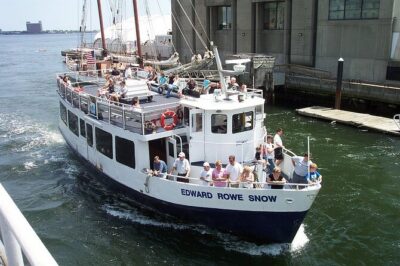
Boston Historic Taverns Tour with Tastings and Ferry
Read our review →
Historic Pubs Walking & Ferry, Food & Drink Tour
Read our review →
Halifax: Georges Island National Historic Site Ferry Ticket
Read our review →
Batam Heritage Tour with Singapore Ferry Ticket, Lunch & Massage
Read our review →Day Tour of Macau’s Historic Landmarks with Ferry from Hong Kong
Read our review →Lists this crossing appears in