

REVIEW · MUMBAI FERRY TRIPS
All in one-Combo of City, Dhobighat, Slum & Dabbawala with ferry and train ride.
Mumbai’s daily life is the real show here. In one long day, you move from the carved stone front of Chhatrapati Shivaji Terminus to the washermen of Dhobi Ghat, watch dabbawalas work around Churchgate, and walk through both the homes and small businesses of Dharavi. The mix is unusual and gives you far more than a standard monument tour.
I like the variety of transport, especially the ferry and short train ride, because they put you into the city instead of keeping you behind car windows. I also like that the tour includes working Mumbai: laundry, food delivery, and local industry. The main drawback is the pace. Seven to ten hours is a long day, and each stop gets only a short visit.
Key points at a glance
- One long Mumbai day: Eight major stops cover colonial architecture, seaside views, Gandhi’s former home, laundry work, food delivery, and Dharavi.
- Three ways to move: You travel by air-conditioned vehicle, ferry, and suburban train, giving the day more local character.
- Private activity: Only your group participates, which can make the busy schedule easier to manage.
- Working-city focus: Dhobi Ghat, the dabbawala service, and Dharavi show how people live and earn their money.
- Useful inclusions: A budget Indian lunch, guide, entry fees, and transport are included in the $85 price.
- Good weather matters: The ferry portion depends on conditions, and poor weather can lead to a new date or refund.
Why this tour works for a first Mumbai day
Mumbai can feel hard to organize on your own. Its sights are spread across South Mumbai, the railway network is crowded, and the city’s best experiences are often tied to a particular time or place. This tour solves much of that problem by joining the main sights with three very different forms of urban life.
You begin with grand public buildings and the waterfront. Later, the focus shifts to people at work. You see the dabbawala delivery system at Churchgate, laundry workers at Dhobi Ghat, and the residential and commercial sides of Dharavi on foot.
That range is the strongest reason to book. This is not simply a sightseeing circuit of monuments. It gives you a quick reading of Mumbai as a financial center, port city, railway city, and place of small-scale work.
The schedule is demanding, though. The listed stops add up to several hours even before driving, waiting, lunch, and transfers. The full outing can run from seven to ten hours, so you should begin with enough energy for a one to one-and-a-half-hour walk in Dharavi.
The tour is private, so your group does not have to share the guide with strangers. That matters on a day with several changes of transport. It may also help if you want to ask questions about subjects that need care, such as poverty, informal work, and the difference between seeing a neighborhood and treating it as a spectacle.
More train and ferry trips in the world:
- From Rome: Positano & Amalfi Coast Day Trip by Train & Ferry
★ 4.6 · 225 reviews - Amalfi Coast by Train & Ferry with Smart Digital Guide
★ 4.3 · 37 reviews - Cinque Terre by train and boat (no ferries in winter)
★ 5.0 · 17 reviews
Chhatrapati Shivaji Terminus: Mumbai’s grand railway entrance
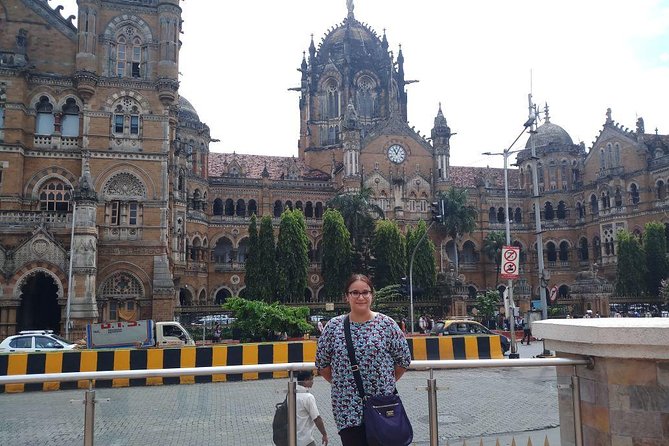
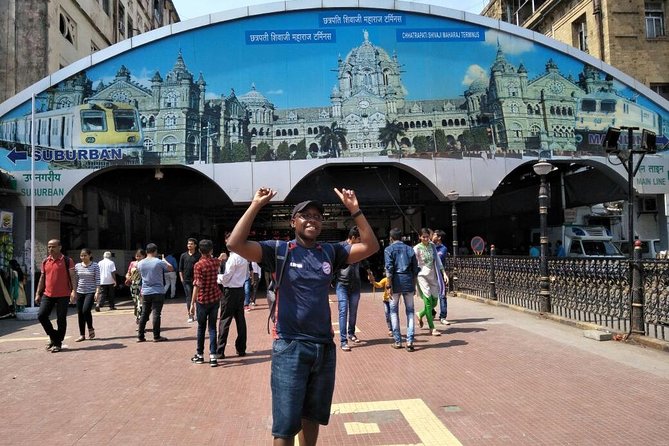
Chhatrapati Shivaji Terminus, formerly Victoria Terminus, is one of the day’s strongest architectural stops. Its design follows the grand Gothic railway style associated with St Pancras in London, with carved stone decoration, stained glass, flying buttresses, and a central dome.
You get 20 minutes here, with admission included. That is enough to take in the exterior and hear why the building matters, but it is not a long architectural study. If you care deeply about design, use your time for the carved details and the overall shape rather than trying to inspect every ornament.
The station opened in 1887 to mark Queen Victoria’s jubilee. The first steam service from Mumbai ran to Thane, about 45 kilometers away. The old engines are gone, but the station still serves around 2.5 million commuters each day according to the tour description.
That last detail helps explain why CST is more than a photogenic building. It remains part of Mumbai’s working transport system. The name changed to honor the Maratha ruler Chhatrapati Shivaji, but many people still use the old name, VT.
Marine Drive and the Arabian Sea
Marine Drive gives you a short break from buildings and traffic. The six-lane road curves for about three kilometers along Mumbai’s natural bay, linking Nariman Point with Malabar Hill. Its broad seaside promenade is where people come for air, open views, and sunset.
The visit lasts 25 minutes and costs nothing extra. Your time here may be enough for a walk along the edge and a few photographs, but it is not long enough to settle in for the full sunset experience unless the timing happens to match.
I like this stop because it gives the tour a clear sense of Mumbai’s position beside the Arabian Sea. After the enclosed station and before the dense city sights, the open waterfront helps you reset. The view is the point, so do not expect a museum or formal attraction.
Gateway of India: a colonial monument with an Indian life
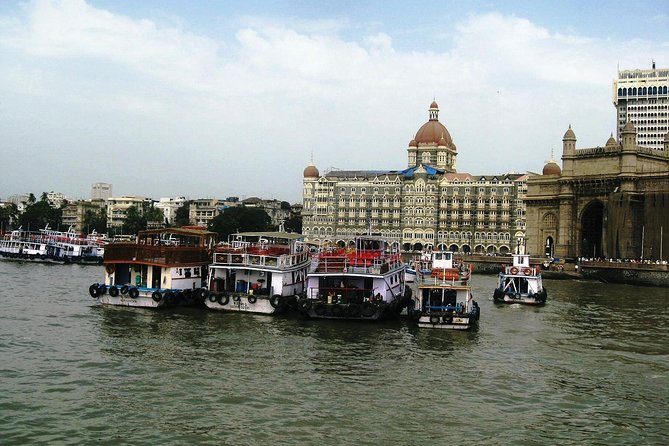
The Gateway of India is Mumbai’s best-known monument and one of its most crowded public meeting points. Built from yellow basalt, the arch was designed for the 1911 visit of King George V and Queen Mary. Its four turrets and carved latticework reflect the imperial purpose of the building.
The irony is hard to miss. The gateway marked a royal visit during British rule, yet it later became associated with the departure of the last British ships from India in 1947. Today, it belongs to the city as much as to that colonial past, with local people and sightseers filling the area around it.
You get 25 minutes here, with no admission charge. The time is practical for seeing the arch and the steps leading toward the water. It is less suitable if you want a slow visit around the nearby waterfront.
The stop also links naturally with the ferry. You go to Apollo Bunder in Colaba and take a short cruise along the city’s coast. The ferry is included, and it changes your view of Mumbai from street level to the water. Since the experience requires good weather, the ferry portion is the part most likely to be affected by conditions.
More ferry trips worth booking in the world:
- New York City: Statue of Liberty & Ellis Island with Ferry
★ 4.6 · 18,683 reviews - All Inclusive Blue Mountain,Scenic World,Lunch,Koalas,ferry
★ 5.0 · 7,832 reviews - Muir Woods and Sausalito (Return by Bus or Ferry)
★ 4.5 · 5,098 reviews - Blue Mountains Small-Group Tour from Sydney with Scenic World,Sydney Zoo & Ferry
★ 5.0 · 3,709 reviews
Mani Bhavan and Gandhi’s Mumbai years
Mani Bhavan is a quieter stop. This two-story house was Mahatma Gandhi’s Mumbai residence and now contains a reference library, a photo display, and personal items. The collection includes more than 2,000 books and the spinning wheel Gandhi used.
You have 20 minutes here, with admission included. That is brief, but the compact setting makes a short visit useful. Expect a small memorial museum rather than a large institution with many galleries.
This stop adds political and personal context to the day. The tour is otherwise focused on transport, labor, architecture, and city life, so Mani Bhavan provides a different look at Mumbai’s role in India’s independence movement. The old spinning wheel is especially direct: it connects a famous national figure with a simple object used in daily work.
The ferry from Colaba
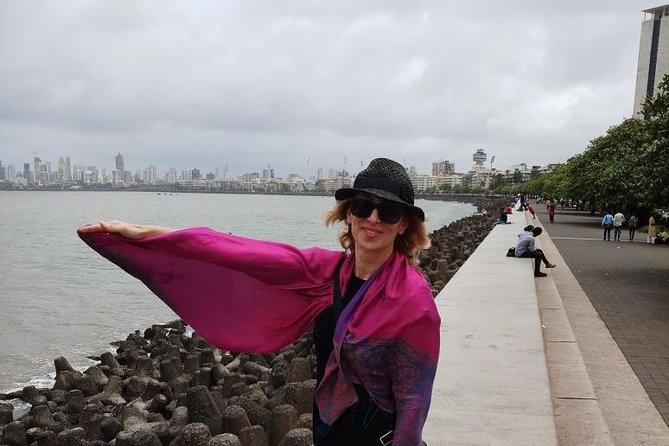
The ferry segment begins at Apollo Bunder in Colaba. You cruise along Mumbai’s coastline rather than simply driving from one sight to the next. The ride is listed at about 20 minutes and includes admission.
This is a small part of the overall day, but it matters because the tour does not rely only on a private vehicle. The ferry gives you a better sense of the city’s waterfront and adds a pleasant change of pace after the Gateway of India.
Keep expectations realistic. The description calls it a ferry tour, not a long harbor excursion. Weather can affect the operation, and the schedule may change if conditions are poor. If the ferry is important to you, ask about the day’s plan when your tour begins.
Churchgate and the dabbawala system
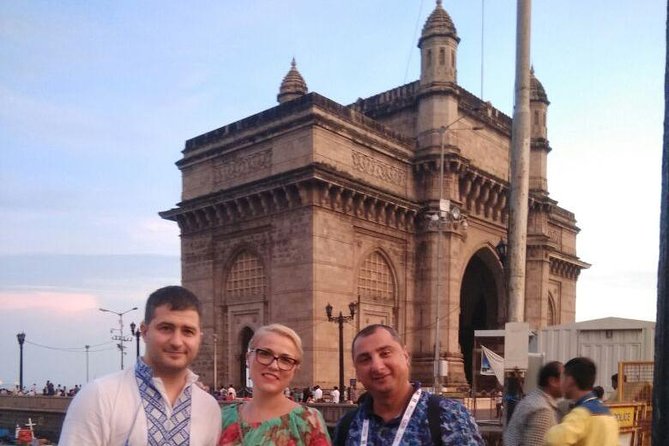
At Churchgate Railway Station, you see the dabbawala operation and take a train ride. A dabbawala delivers freshly prepared meals from homes to office workers in lunch boxes. The system depends on teamwork, strict timing, and a low-tech network of people moving through the city.
The visit lasts about 50 minutes and includes the train ride. This is one of the most distinctive parts of the day because you are not just hearing about Mumbai’s famous lunch deliveries. You are seeing the activity around a railway station that helps make the system work.
The train ride also has practical value. Mumbai’s suburban railways are central to the city, and using one gives you a brief taste of everyday movement. It is not a long rail journey, but it breaks up the private transport and shows how the city functions at street and station level.
Timing matters here. Dabbawala work is based on deliveries, so the exact experience can depend on the tour schedule. The description promises live activity at Churchgate, but it does not give a precise start time or guarantee a particular delivery sequence.
Dhobi Ghat and the work of laundry
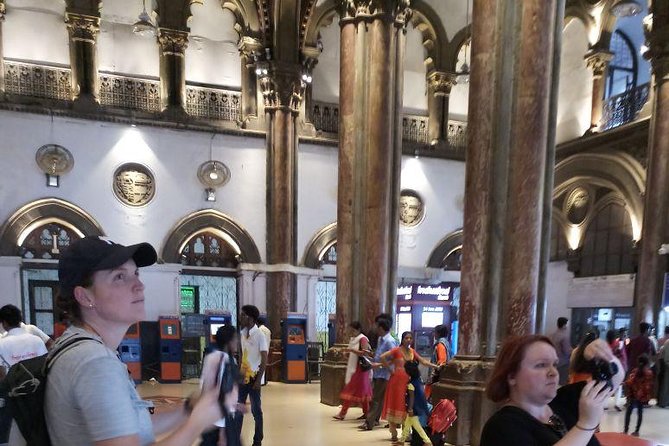
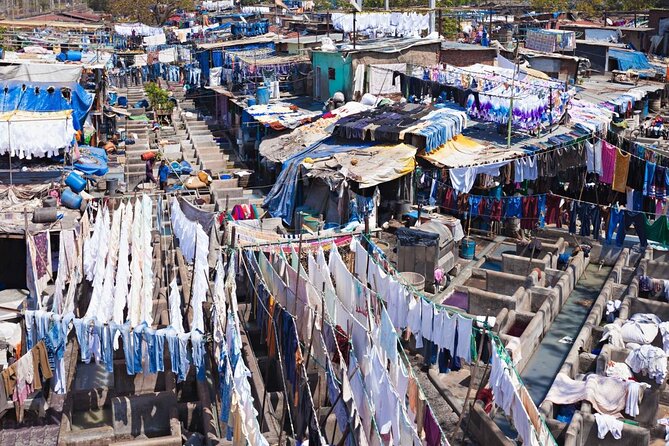
Dhobi Ghat is one of Mumbai’s most unusual working sites. Traditional washermen collect clothing, wash it, press it, and return it to homes. The work is carried out in rows of concrete washing pens, each with a stone surface for beating the fabric clean.
The process described is physical and highly organized. Clothes are soaked in soapy water, thrashed against the stones, placed in large vats of starch, hung to dry, ironed, and sorted into bundles. Nearly 200 dhobis and their families work together, with the occupation often passed down through generations.
You spend about 35 minutes here, with admission included. The visit is short, so you will mainly get an overview and a chance to observe the layout. The guide is important. A good explanation can help you understand the work without reducing it to a photo stop.
You should also bring a respectful attitude. This is a workplace and home area, not a staged attraction. Ask before taking close photographs, and listen to the guide’s instructions. The value of the stop comes from seeing a real service economy that still operates by hand.
Walking through Dharavi
Dharavi is the longest stop, with about one hour listed for a walking tour. The route includes residential and commercial areas, giving you a wider picture than a quick drive past the settlement.
Walking matters here. From a vehicle, you see only a fraction of the area. On foot, you can understand how homes and small businesses exist side by side. The tour description presents Dharavi as one of Asia’s largest slum areas, but the more useful point for you is that it is also a place where people live and work.
This is the part of the day that requires the most thought. Poverty can easily become a form of entertainment if a tour is poorly handled. The private format gives you a chance to ask the guide how the visit is organized and how local residents are treated. Stay attentive to privacy, avoid intrusive photography, and follow the guide’s instructions.
The walk is listed at one hour, while the broader overview describes one to one and a half hours. That difference suggests you should allow some flexibility. You need a moderate level of physical fitness for the full day, especially with walking, stairs or platforms at transport points, and the heat that can affect outdoor stops.
Transport, lunch, and the $85 value
At $85 per person, the tour is not the cheapest way to see Mumbai. It can still be a fair deal if you value convenience and want all the main elements arranged in one day.
The price includes an air-conditioned vehicle, ferry, train ride, English-speaking guide, lunch, entry fees, and taxes. You do not have to arrange separate transport between South Mumbai, Churchgate, Dhobi Ghat, and Dharavi. The included meal is described as a budget Indian lunch, so you should expect something simple rather than a restaurant experience.
The value is strongest for a first visit, a short stay, or a cruise stop when you want a broad introduction without building your own timetable. It is weaker if you prefer slow museum visits, long meals, or one subject explored in detail.
A tour of this length also reduces the risk of spending too much time finding stations or negotiating local transfers. The private format is useful here. If your group is delayed, the guide may be able to adjust the order, although no specific changes are promised.
One experience included a ship arriving an hour late, with guide Gurrit staying in regular contact and meeting the group with a driver. That is a useful sign for anyone arriving at Mumbai’s port, though you should still confirm your pickup details in advance.
Who should book this Mumbai day tour?
I would choose this tour if you want a fast but varied introduction to Mumbai. It suits first-time visitors, people with only one free day, and anyone who wants to combine famous buildings with ordinary work life.
It is also a good match for a private group that values a guide and does not want to solve the city’s transport puzzle alone. The ferry and train make it more interesting than a standard car-only tour.
I would hesitate if you dislike long days, walking, crowded public transport, or visits that deal directly with poverty and working conditions. Dharavi and Dhobi Ghat deserve care, and neither should be treated as a simple backdrop for photographs.
Book with the weather in mind. You can cancel for a full refund up to 24 hours before the start time. Poor weather may lead to a different date or a full refund, while late cancellations and late changes are not accepted.
Final verdict: a strong overview, not a slow city tour
This is a practical way to see many sides of Mumbai in one day. The best parts are the combination of ferry and train travel, the live dabbawala activity, the physical work at Dhobi Ghat, and the walking visit through Dharavi.
The tradeoff is speed. You will sample each place rather than study it closely. At $85, the tour makes the most sense when time, transport, and a private guide matter more to you than having a relaxed schedule.
If you want Mumbai’s landmarks and working neighborhoods in one organized day, I would book it. If you want long visits, quiet reflection, or a deep focus on one district, choose a slower experience instead.
FAQ
How long does the tour last?
The experience lasts approximately seven to ten hours.
What sights are included?
The tour includes Chhatrapati Shivaji Terminus, Marine Drive, the Gateway of India, Mani Bhavan Gandhi Museum, Colaba, Churchgate Railway Station, Dhobi Ghat, and Dharavi.
Is transportation included?
Yes. The tour includes an air-conditioned vehicle, a ferry ride from the Colaba area, and a train ride connected with the dabbawala visit at Churchgate.
Is lunch included?
Yes. A budget Indian meal is included.
Is the tour private?
Yes. Only your group participates in the activity.
Is an English-speaking guide included?
Yes. An English-speaking guide is included.
How long is the Dharavi walk?
The Dharavi portion is listed as a one-hour walking tour. The general description allows for one to one and a half hours.
Does the tour require much walking?
You should have a moderate level of physical fitness. The tour includes walking in Dharavi, movement around stations, and visits to several outdoor and public areas.
Can the ferry portion be canceled?
The experience requires good weather. If poor weather causes cancellation, you will be offered a different date or a full refund.
What is the cancellation policy?
You can cancel at least 24 hours before the start time for a full refund. Cancellations or changes made less than 24 hours before the start time are not accepted for a refund.
New ferry trips in the world
- Lake Como: Villa Carlotta Entry Tickets with Ferries★ 4.1 · 5 reviews
- Private Tangier Tour from Ferry /Cruise ship Including Lunch★ 3.8 · 12 reviews
- NYC: Brooklyn Bridge and DUMBO Tour with East River Ferry★ 4.9 · 28 reviews
- Lake Como: Lakeside Villas Entry Tickets with Ferries★ 4.2 · 77 reviews
- Vancouver False Creek Ferry Tour★ 5.0 · 32 reviews
- Old Town Alexandria in a Day with Round Trip Ferry Cruise★ 4.5 · 17 reviews
- Victoria & Butchart Gardens Tour with Gulf Island Ferry★ 4.0 · 7 reviews
- Photography, Hiking & Ferry to Bowen Island★ 5.0 · 29 reviews
Mumbai Ferry Trips, compared.
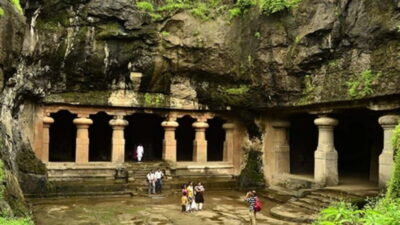
Elephanta Caves Exploration: Guided Tour with Ferry Experience
Read our review →
Mumbai City Tour with Ferry Ride and Dharavi Slum
Read our review →
Private Bollywood Tours With Elephanta cave Inculiding Ferry Ride
Read our review →
Half Day Elephanta Caves Guided Tour with Ferry Ride
Read our review →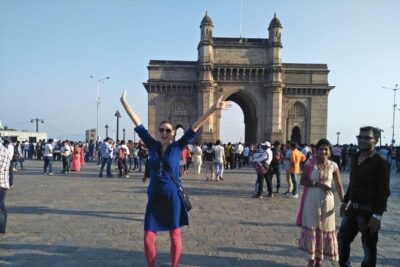
Private Full-Day Sightseeing Tour of Mumbai with Ferry ride
Read our review →
Lists this crossing appears in